
Since August 2, 2026, the AI Office covers general-purpose AI (GPAI) model providers and specified AI systems, national competent authorities cover other AI systems, and the EDPS covers AI systems used by EU institutions. Teams should keep scoped assessments, controls, incidents, disclosures, and runtime evidence ready for the authority responsible for their system.
Who Investigates What Under the AI Act?
The European Commission enforcement framework identifies the responsible authorities. Jurisdiction depends on the model, system, provider, and deployment context. The framework identifies three authority categories:
AI Office
Enforces rules for GPAI model providers; AI systems developed by the provider, or a provider in the same business group, of the underlying GPAI model; and AI systems integrated into DSA-designated very large online platforms (VLOPs) or very large online search engines (VLOSEs).
National competent authorities
Member State authorities enforce the rules for other AI systems. The Commission page does not identify every national authority or set out each authority’s powers.
EDPS
The European Data Protection Supervisor enforces the rules for AI systems used by EU institutions. The framework does not set out an equivalent EDPS powers map.
Record the system’s intended purpose, the model provider, the operator's provider or deployer role, whether the system is integrated into a designated VLOP or VLOSE, and whether it is used by an EU institution. Those facts are more useful for routing an inquiry than the generic label “AI agent.”
What the AI Office and Commission Can Do
The detailed powers in the Commission’s overview apply specifically to the AI Office and Commission. The page does not say that national competent authorities or the EDPS have the same toolkit.
Three Complaint and Reporting Channels
Article 2 of the EU Artificial Intelligence Act defines the territorial scope. The Act covers providers placing AI systems on the EU market or putting them into service regardless of location, EU-based deployers, and third-country providers or deployers where the system’s output is used in the Union.
The application date is one part of readiness. Teams also need to know which authority may ask questions and whether they can produce an accurate, scoped record of assessments, controls, incidents, disclosures, and system operation.
AI agent platform selection should include governance records and evidence workflows in the criteria. Teams still creating a shortlist can consult our 2026 EU platform comparison.
Further reading: AI Act enforcement timeline.
What the EU AI Act Requires
The Act uses a risk-based framework. A practical review separates prohibited practices, high-risk systems, uses with specific transparency duties, and uses with fewer system-specific duties.
Classification follows Article 6 and the system’s intended purpose, not the word “agent.” A customer-facing assistant may trigger Article 50 disclosure, while an agent used for a specified Annex III purpose may be high-risk. The operator’s role determines which duties apply. Our platform can help organize operational controls and scoped runtime evidence.
We map the use case and relevant obligations to Connic traces, approval gates, audit logs, human oversight, and deployer documentation.
Discuss compliance requirementsEU AI Act Application and Enforcement Timeline
The EU AI Act uses a phased rollout. Some provisions now apply and are enforceable; others are still ahead:
Specified transparency duties are now enforceable. The Service Desk enforcement timeline lists the applicable dates. High-risk deployer duties moved to December 2027 and August 2028 under the AI Omnibus, but the logging and oversight infrastructure that may support those duties takes time to establish.
What the AI Omnibus Changed
The Commission’s AI Omnibus summary explains the changes. Regulation (EU) 2026/1744 amended the AI Act’s schedule and several substantive provisions, including parts of the high-risk framework.
The Omnibus did not create a general delay. Agents that talk to people or generate content remain subject to the applicable Article 50 duties already in force. Our Article 50 guidelines walkthrough explains the five disclosure triggers in detail.
How AI Act Duties Map to AI Agents
The EU AI Act applies to AI agents that meet its definition and scope. An organization using an agent under its authority can be a deployer; one that develops an agent, or has it developed, and places it on the market under its own name can be a provider. Some teams can hold both roles.
For teams operating high-risk systems, the following control areas recur in practice:
These controls need connected records. The platform should tie governance decisions to the systems and runtime evidence they cover.
How Connic Supports Evidence Readiness
Our Enterprise AI Governance feature organizes records around a project-scoped AI system. Teams can document the intended purpose, owner, geographies, affected people, linked environments, deployments, and agents; keep immutable, versioned preliminary assessments; map operational controls; track transparency evidence and incidents; and export scoped evidence snapshots.
The end-to-end workflow covers provider and deployer roles. Authorised representative, distributor, importer, and product manufacturer roles remain in the assessment but block approval, control generation or refresh, and export until the coverage is resolved.
Connic does not determine jurisdiction, make a final legal classification, calculate reporting deadlines, judge whether evidence will satisfy an authority, or certify compliance. Those decisions remain with the organization and its counsel. AI Governance documentation or governance feature overview.
Human Oversight: Conditional Approval Gates
Article 14 of the EU AI Act requires high-risk AI systems to be designed for effective human oversight. Article 26 requires deployers to assign oversight to people with the necessary competence, training, authority, and support. Depending on the system and risk, oversight can include monitoring, interpreting outputs, overriding or reversing a result, or interrupting operation. Pre-execution approval is one implementation pattern for sensitive actions, not a universal requirement.
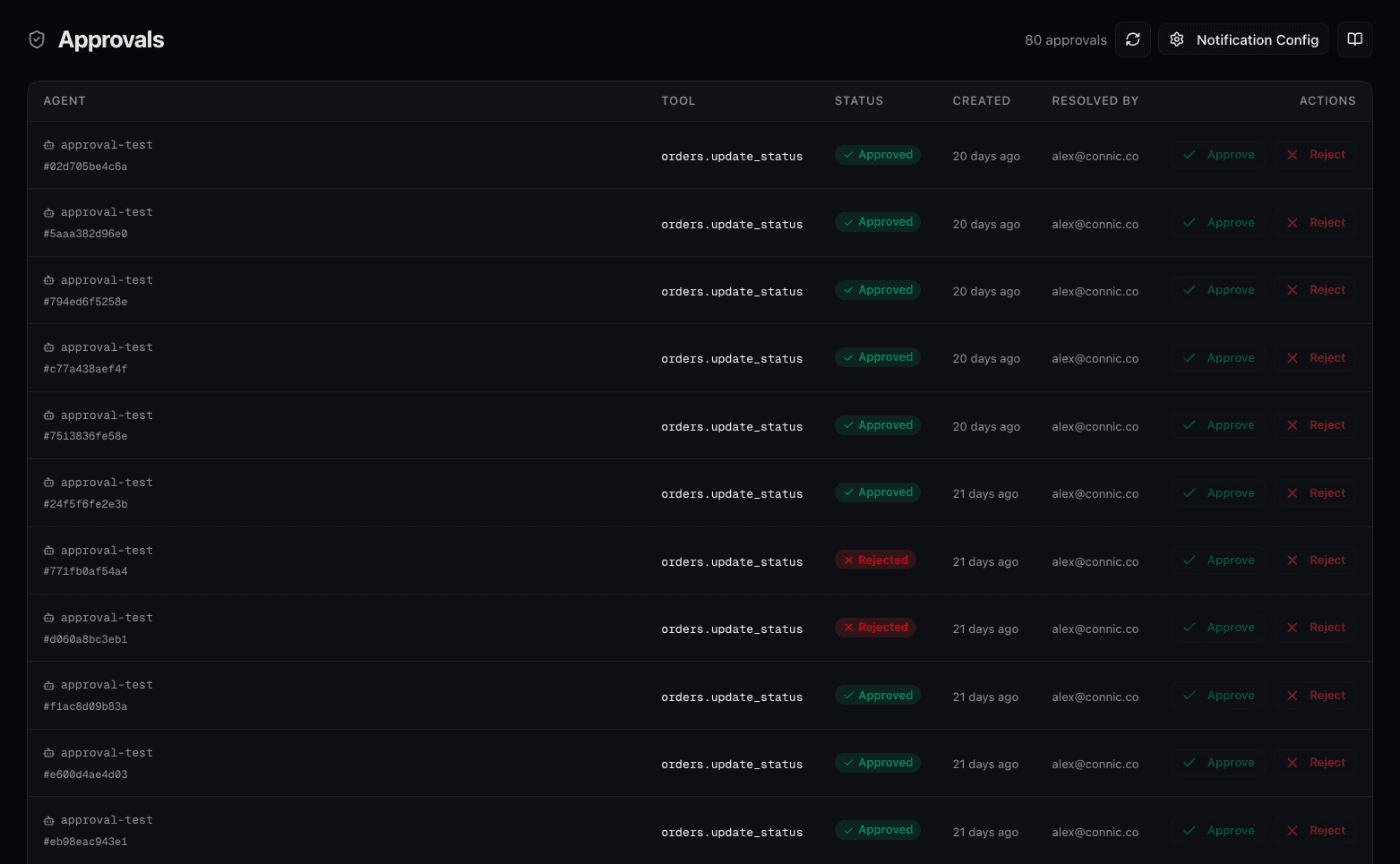
Conditional approvals pause execution when an agent reaches a sensitive action (deleting records, processing a refund, sending an external email). A human reviewer sees the review context: the agent and run, which tool is being called, and with what parameters. Approval resumes the agent; rejection follows the configured failure or continuation path.
Actions without a configured gate continue without approval. Each decision records the timestamp, reviewer, tool, parameters, and any optional reason the reviewer supplied. That record can support an Article 26 evidence review where the duty applies.
Transparency: Detailed Recorded Visibility
Article 50 requires disclosure for specified interactive uses and marking or disclosure for specified synthetic content. Separate high-risk duties require information, logging, and oversight. Our role is to give operators visibility into what the agent actually did so they can investigate behavior and produce evidence.
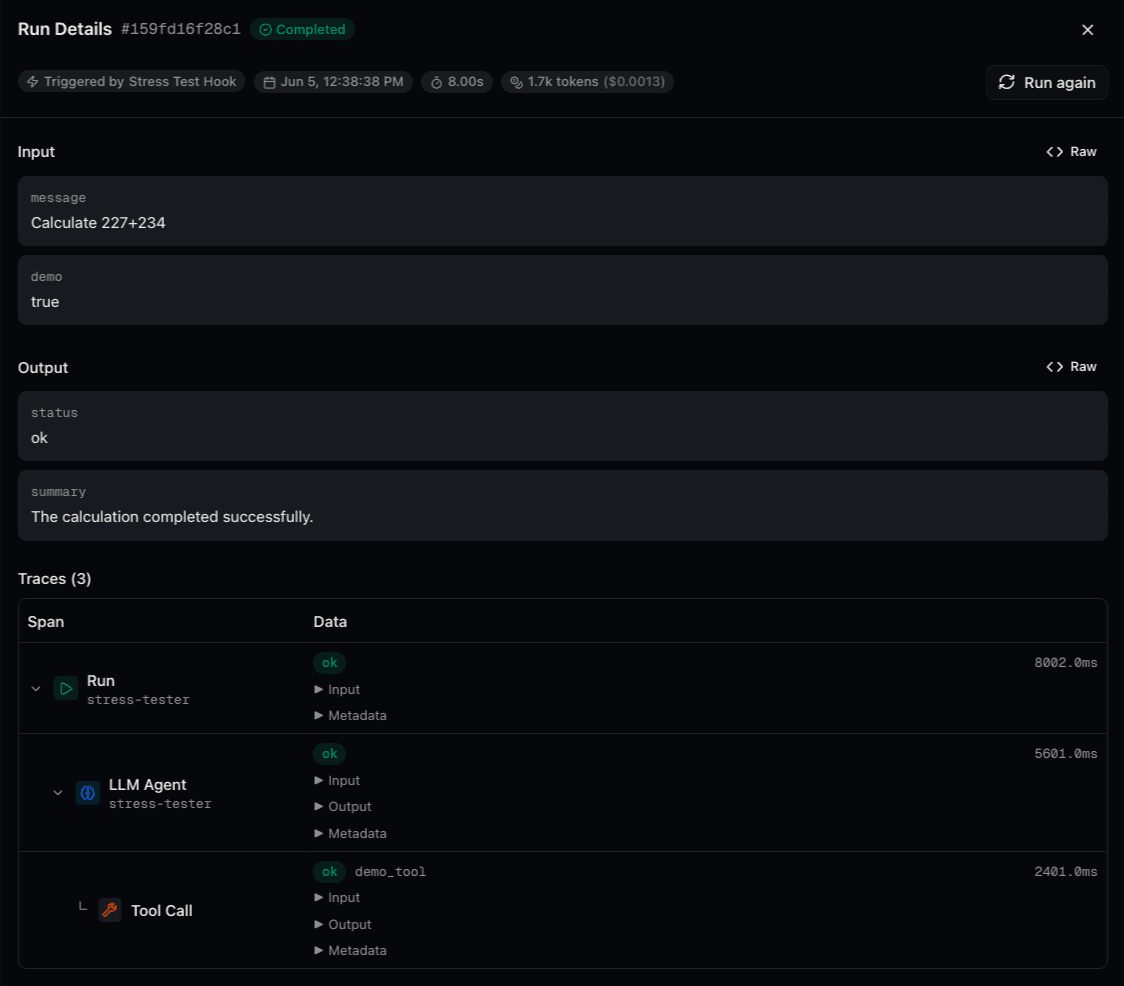
Our agent observability captures the following data about agent operations:
Record-Keeping: Scoped Operational Evidence
Articles 12, 19, and 26 set logging, retention, and monitoring duties for high-risk systems and the operators covered by those provisions. If an authority asks what an agent did on a specific date with a specific input, the response needs an accurate, scoped operating record.
Connic records the following operational fields. Which fields are legally relevant depends on the system, the operator's role, the request, and the applicable obligation:
These runtime records can be attached to a governance workflow and used in investigations or compliance reviews. AI Governance exports are metadata-only and intentionally exclude raw prompts and model outputs, so teams should identify any additional records they need to retain outside the export.
Risk Management: Guardrails That Apply Runtime Checks
Articles 9 and 15 set risk-management, robustness, and cybersecurity duties for high-risk systems. Relevant agent risks include prompt injection, personally identifiable information (PII) leakage, system prompt extraction, off-topic responses, and data exfiltration. The OWASP Top 10 for Agentic Applications 2026 also covers goal hijacking, tool misuse, identity and privilege abuse, memory poisoning, and cascading failures.
Our guardrail implementation uses configured rules to evaluate input and output paths for threats such as these:
Guardrails support block and warn modes; configured PII rules also support redact. Teams can also write custom guardrails in Python for domain-specific compliance rules: financial disclaimers, regulatory language requirements, internal terminology policies.
Every guardrail evaluation is recorded as a trace span, so the record shows which control ran, its result, and how the runtime responded. That record can support control testing and review without proving that the control is legally sufficient.
Continuous Evaluation: Record Regression Signals
Applicable monitoring duties continue after deployment. Agent behavior can change with model updates, prompt modifications, or shifts in user input. Automated evaluation can provide one source of ongoing evidence.
Configure LLM judges to score matching runs at the configured sample rate against custom criteria. Accuracy, helpfulness, safety, and compliance with organizational policies are recorded as structured results, and score changes surface in the dashboard. Teams can also run A/B tests for prompt changes and compare results before a wider rollout.
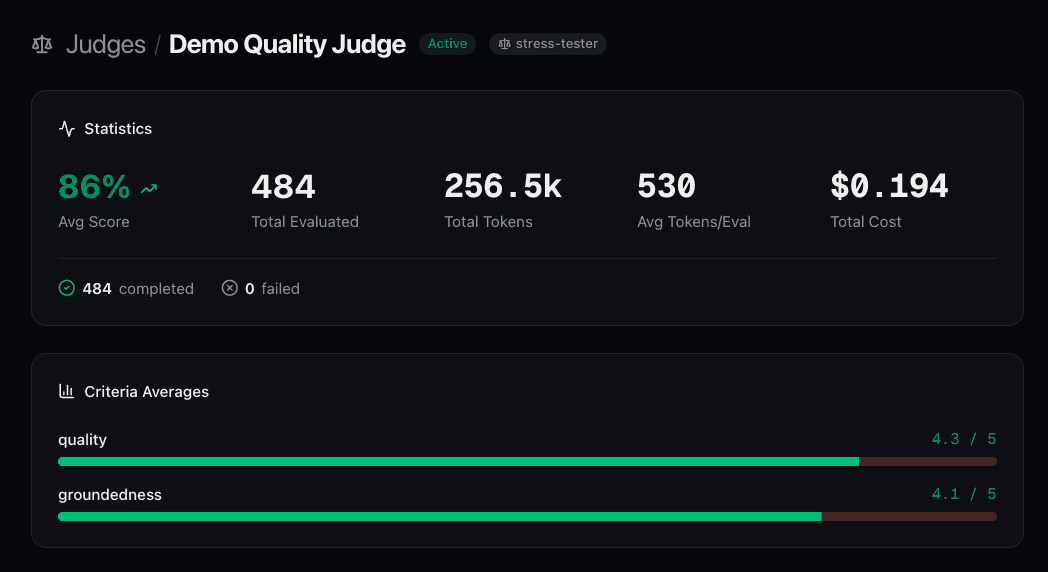
Run-level evaluation can support an Article 9 risk-management process by surfacing regressions between formal reviews. It does not replace the broader legal and operational risk-management program.
Data Governance: Scope and Residency Controls
Article 10 sets data-governance requirements for training, validation, and testing datasets used by high-risk systems. GDPR and other data law can separately apply to data an agent processes. Our platform provides the following controls and deployment choices:
- ✓No Connic training on customer data. Connic does not use Customer Data to train models. BYOK provider handling follows the provider terms selected by the customer.
- ✓Access configuration. Tool configuration and environment variables limit which sources an agent can access. The customer determines that scope.
- ✓Data residency. connic/* inference stays in the EU. End-to-end project residency also depends on the selected deployment region and every customer-configured provider, tool, judge, guardrail, and destination.
- ✓Encryption everywhere. All data encrypted in transit (TLS 1.2+) and at rest (AES-256). Secrets are injected at runtime, never stored in code or logs.
- ✓Model choice. Our customers can select an EU-hosted connic/* model or configure a BYOK provider with their own credentials. Articles 51–56 of Regulation (EU) 2024/1689 set out GPAI-model-provider obligations. System-level provider and deployer duties still depend on the customer’s role and use case.
Security and Robustness: Infrastructure-Level Protection
Article 15 requires high-risk systems to achieve appropriate levels of accuracy, robustness, and cybersecurity. Platform and runtime controls can support that work, but their legal sufficiency depends on the system and its risks.
Comprehensive details are available on the Security page and EU AI Act compliance page.
AI Act Penalty Ceilings
The EU AI Act is binding law. Articles 99 and 101 of Regulation (EU) 2024/1689 define the statutory penalty tiers:
Article 99 applies turnover-based ceilings to undertakings and includes lower maximums for SMEs, so the exact cap depends on the organization and violation. The figures above are the Act’s top penalty tiers, not the automatic fine for every case.
The €7.5 million or 1% ceiling above is the AI-system information-failure tier. The Commission’s overview treats GPAI-model information failures under different maxima, so teams should not apply the AI-system ceiling to GPAI requests by default.
The new complaint and reporting channels make evidence quality part of incident response. A complete, scoped record helps a team investigate an allegation, brief counsel, correct a problem, and prepare an accurate response if an authority asks.
Keep Governance and Runtime Evidence Connected
Teams can assemble human-oversight workflows, audit logging, guardrails, evaluation pipelines, and governance records across separate tools. When those records are disconnected, reconstructing the scope and relationships between a system, assessment, control, incident, and runtime evidence requires manual work.
Connic connects those records to the environments, deployments, and agents they cover. Approvals, run traces, guardrail results recorded within those traces, judges, incidents, and evidence snapshots can then support one review workflow instead of a manual reconstruction across disconnected data.
Evidence-Readiness Checklist
Teams running AI agents or planning to deploy them should build a response pack before an information request, complaint, or incident arrives:
Record the jurisdiction facts. For each system, document the intended purpose, model provider, operator roles, relevant geographies, VLOP or VLOSE integration, and use by any EU institution.
Keep a versioned assessment. Preserve the role and risk analysis, rationale, source version, reviewer, unresolved uncertainty, and the obligations mapped from the latest approved preliminary assessment.
Link controls to evidence. Track the accountable owner, implementation and evidence status, exceptions, approvals, traces, guardrail results, evaluations, and customer-managed Article 50 documentation.
Maintain the incident trail. Record monitoring ownership, signals, review dates, awareness time, corrective actions, reportability decisions, and any authority-notification evidence.
Rehearse the response. Name an owner for information requests, test the export path, identify records outside metadata-only snapshots, and have counsel check accuracy, completeness, scope, and privilege.
Keep the evidence record current. Before responding to an authority, have qualified counsel check the official text, the system’s classification, and the response scope.